You do not need a perfect beach-day schedule to make sunscreen easier to use. You need a bottle you can reach, directions you have actually read, and a plan that still works when lunch runs late or a walk turns into an afternoon outside.
Start by sketching the outdoor parts of your day rather than treating your morning application as a completed task. The aim is a workable habit that combines sunscreen, clothing, and shade, with clear places to pause and follow your product’s reapplication instructions.
Read your bottle before you build the schedule
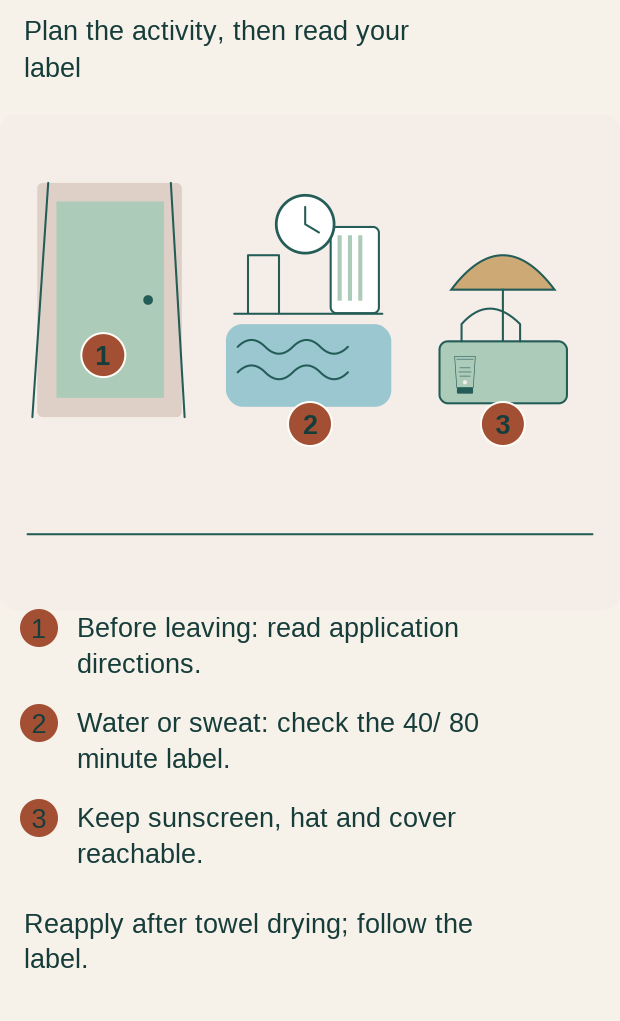
The FDA’s sunscreen labeling guidance describes applying generously 15 minutes before sun exposure and reapplying at least every two hours. For water-resistant products, directions also specify reapplying after the labeled 40 or 80 minutes of swimming or sweating and immediately after towel drying (FDA labeling guidance).
Those instructions belong together, so do not pick whichever line feels most convenient. Read the actual Drug Facts panel each time you change products, including its warnings and any directions specific to the format you bought.
A helpful first step is to photograph that panel before you leave home. You can check it without squinting at a tube in bright light, and you will know whether a reminder on your phone matches the bottle in your bag.
Think of a reminder as a prompt to act, not proof that you are protected until an alarm rings. It cannot tell you whether you applied enough, missed an area, rubbed product away, or followed the directions in the first place.
Turn an ordinary day into a few outdoor blocks
Write a short list such as morning commute, lunch outside, afternoon errands, and evening practice. Beside each block, note where your sunscreen will be and whether you can reach a covered place to apply it.
This takes less effort than planning every minute, and it reveals problems while you can still fix them. A bottle locked in the car is a different plan from one in the tote you carry into the park.
For an office day, your most useful checkpoint may be the moment you decide to eat lunch outside. Put the bottle beside the things you take to lunch so that leaving your desk also cues you to check your sun-protection plan.
For a long outdoor shift, fit reminders around breaks you can actually take. If your workplace sets hygiene or protective-equipment rules, ask how you can follow sunscreen directions within those rules rather than improvising around them.
For a weekend with several stops, leave space for change. If the shaded café is full and you move to an exposed picnic table, revise your plan instead of assuming the original itinerary still describes your day.
Make the next application physically easy
Pack the product in an upright pouch or a compartment that you can identify by touch. Keep it separate from food, and make sure the cap closes properly before you put it beside a phone or spare clothes.
A labeled, original container makes it easier to retain the directions and identify what you used. If you choose a smaller travel package, pick one that still gives you the information you need rather than an anonymous pot with a handwritten SPF number.
Before an outdoor event, find out whether bags are restricted and whether you can bring your chosen format inside. You are solving an access problem now so that a security rule does not become a surprise halfway through the day.
If you share a family bag, tell everyone where the sunscreen lives. Designate a pocket rather than relying on one person to remember whether it moved into the stroller, cooler, gym bag, or trunk.
Do a quick quantity check while packing, too. A bottle can be technically present and nearly empty, which is not a useful discovery when the nearest store is a long walk away.
Treat swimming and sweating as their own checkpoints
Water resistance has a labeled time limit, and towel drying is a separate reapplication trigger. A pool visit therefore needs more thought than repeating the same two-hour phone alert you use for an ordinary dry afternoon.
Create a landing place where you can read the bottle, find a towel, and pause before heading back out. For example, keep the sun-protection pouch at the same shaded chair as your dry shirt rather than burying it beneath wet gear.
If you alternate swimming and sitting, write down when you enter the water and check the product directions. Do not turn a casual memory of the morning into a claim that the label’s water-resistance window has somehow restarted.
For a sweaty hike, choose a stopping place before the trail becomes crowded or exposed. The planning question is where you will be able to follow the directions, not which imaginary level of sweat would let you skip them.
Do not make a cosmetic finish the only reason you delay necessary reapplication. If your current product makes the routine impractical, that is useful feedback for choosing another suitable formula for the next outing.
Original concept illustration. A doorway, swimming pool and towel, shaded travel pouch, and clock illustrate planning checkpoints. It is not a clinical assessment or a product certification.
Plan clothing and shade before your hands are full
Put a hat and an appropriate covering layer near your shoes so they are part of leaving home. If you prefer a particular outfit, consider its exposed areas while you still have time to choose what else to carry.
Shade also needs an actual location, not a hopeful word on a checklist. Look for seating, covered paths, or a place to wait, and remember that the place you chose in the morning may feel different later.
For a sports sideline, you might choose a covered spectator area and keep a spare layer in your bag. For a market visit, you might plan a shaded break between stalls instead of expecting a sunscreen bottle to solve every part of the outing.
These are practical examples, not a measured protection rating for a particular hat, umbrella, or tree. Check any specific protective claims on clothing and keep following the sunscreen directions for the skin that remains exposed.
If you are organizing a group, share the plan in concrete terms. Saying that there is a shaded meeting point and a break before the next activity helps more than asking everyone to somehow remember sun safety.
Work around makeup without inventing a shortcut
If you wear makeup, plan a moment and a place where you can reapply your chosen sunscreen as directed. Decide what you need to bring and allow enough time to do it without balancing an open compact on a crowded public sink.
There is no benefit in calling an unmeasured dusting or quick mist equivalent to the directions on a different product. Read the directions for the exact format you intend to use, and ask a dermatologist if you need help finding an approach you can maintain.
You can also simplify what you wear on a day with repeated outdoor activity. That is a personal convenience choice, not a requirement to give up makeup or a promise that one particular finish will suit everyone.
If reapplication disrupts a special-event look, discuss the practical problem before the event. A trial run at home can reveal whether the package fits in your bag and whether you need a mirror, without treating the exercise as a laboratory protection test.
Use the next outing to improve the system
After you return home, review one small question: what made the routine difficult? You may find that the issue was an awkward cap, a reminder you could not hear, a missing shaded stop, or simply leaving the bag in the wrong place.
Change that obstacle before buying a whole new collection of products. Moving the pouch, checking the bottle sooner, or choosing a different break location may be enough to make the next day easier to manage.
If sunscreen causes a rash or another concerning reaction, follow the product’s stop-use instructions and seek medical advice rather than repeatedly trying to push through it. Individual symptoms need individual assessment, and an itinerary cannot diagnose what caused them.
Your next workable plan can be very short: read the label, pack an accessible bottle, identify outdoor blocks, and choose places to pause. Keep clothing and shade in the picture, then let the day’s actual activities guide when you check and follow the directions again.
Photo Credits
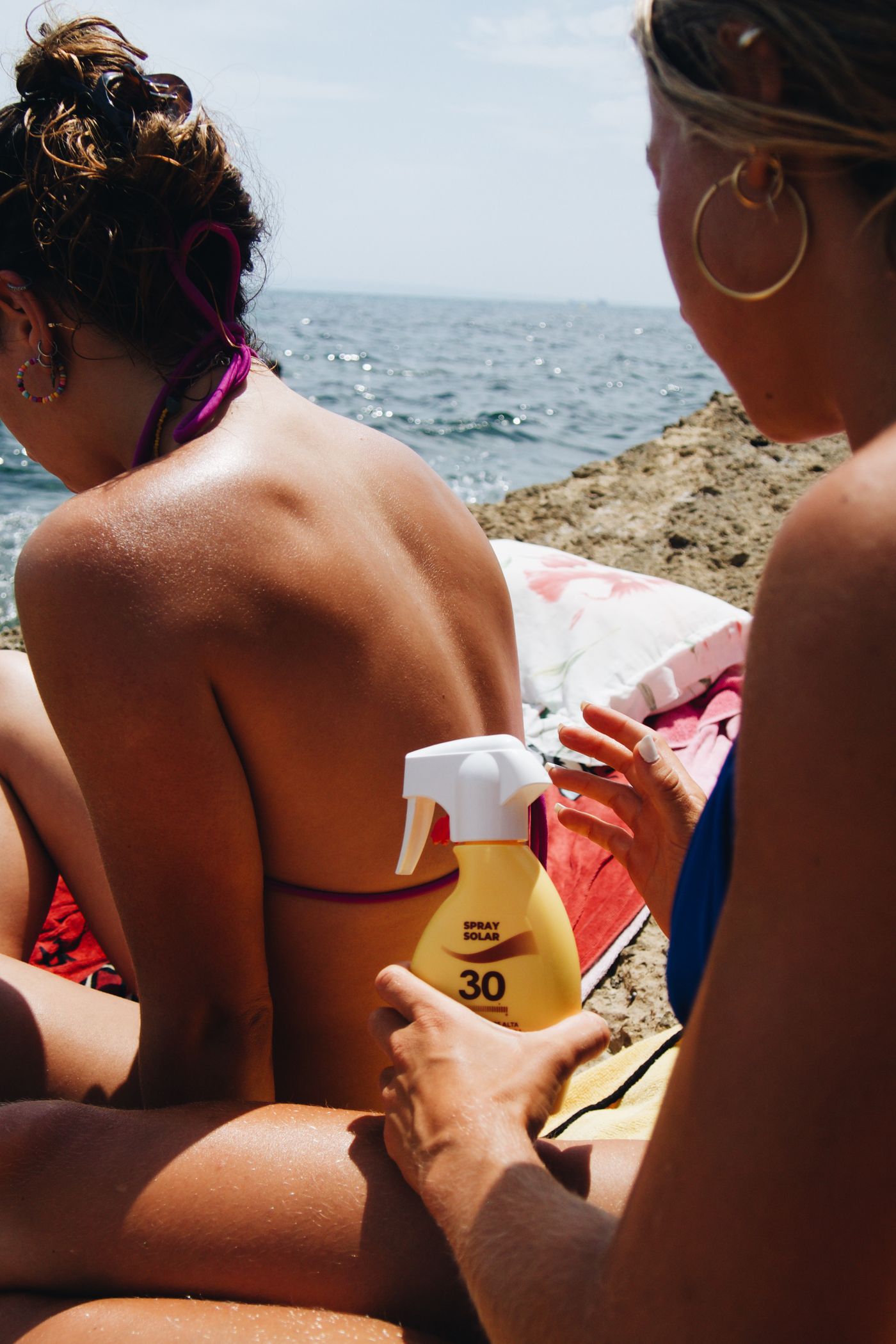
- A coastal stock scene illustrates why sunscreen needs to be accessible; the pictured product is not a recommendation. Photo: Nuria Navarro, Pexels.