The best daily sunscreen for you needs to fit both your protection needs and the routine you can actually follow. A tinted face product, a face-and-body lotion, and a higher-SPF outdoor option solve different shopping problems.
This shortlist compares three exact US listings rather than declaring one sunscreen best for every reader. You will see a Black Girl Sunscreen lotion, Neutrogena Ultra Sheer SPF 70, and CeraVe’s medium-tinted mineral face sunscreen.
We inspected manufacturer information and each linked Amazon listing on October 19, 2026. The comparison is based on documented labels and formats, without hands-on wear tests, shade trials, or independent SPF testing.
Start with the day you are planning
Before choosing a bottle, think about whether you want a tinted face product or an untinted lotion, and whether swimming or sweating is likely. Those questions help you compare relevant labels instead of choosing from the SPF number alone.
The American Academy of Dermatology recommends broad-spectrum SPF 30 or higher and water resistance. Sunscreen also belongs alongside shade and protective clothing, rather than acting as permission to stay outside indefinitely. (AAD: Practice Safe Sun)
Your routine may need more than a morning application. Read the label’s reapplication directions and plan how you will carry the product when you are away from home, especially if your day includes outdoor activity.
| Product | Consider it for | Inspected package |
|---|---|---|
| Black Girl Sunscreen Original SPF 30 | Untinted face-and-body lotion | 2 fl oz · single tube |
| Neutrogena Ultra Sheer Dry-Touch SPF 70 | Higher labeled SPF and documented water resistance | 3 fl oz · single tube |
| CeraVe Hydrating Mineral Sheer Tint SPF 30 | Specific medium-tinted facial option | Medium · 1.7 fl oz · single tube |

Black Girl Sunscreen SPF 30: consider an untinted face-and-body lotion

The inspected Black Girl Sunscreen option is the original SPF 30 lotion in a single two-fluid-ounce tube. Its manufacturer identifies a broad-spectrum face-and-body formula and gives directions that include reapplying after 80 minutes of swimming or sweating.
This is the candidate to examine when you want an untinted product that is marketed for melanin-rich skin. That positioning can help you find a relevant option, but it is not a finding that everyone with a particular skin tone will enjoy the same finish.
The two-ounce tube also makes the quantity easy to understand. If you plan to use one product on several exposed body areas, think about how much you will need and how frequently you will replace a small tube.
Its name does not mean sun protection is optional for other readers or unnecessary for deeper skin tones. Choose according to the actual directions, your preferences, and any advice you have received about your own care.
The main uncertainty is personal wear experience, because this guide did not test how it looks or feels on different people. Avoid turning a brand’s finish description into a guarantee about your skin, your makeup, or how the product behaves during your day.
Neutrogena Ultra Sheer SPF 70: consider a documented water-resistant option

Neutrogena’s inspected listing is one three-fluid-ounce tube of Ultra Sheer Dry-Touch Broad Spectrum SPF 70. The manufacturer’s directions document 80-minute water resistance and reapplication immediately after towel drying, as well as at least every two hours.
Consider this option when a higher labeled SPF and a specifically documented water-resistance period are priorities. Those details are more useful for planning an outdoor day than assuming a familiar brand name identifies the right product.
The words Dry-Touch describe the manufacturer’s intended finish, not a texture result from our testing. If you have strong preferences about shine or feel, treat that as something you still need to evaluate rather than a settled fact.
SPF 70 is not a time allowance that lets you skip reapplication. Keep the application instructions visible when you are deciding whether this is a practical product to take along for a walk, gardening session, or other activity.
Also match the exact SPF and package before buying, since the Ultra Sheer range includes other strengths and formats. A spray or a different SPF lotion is not the three-ounce SPF 70 tube compared in this guide.
CeraVe Sheer Tint SPF 30: consider a specific medium face tint
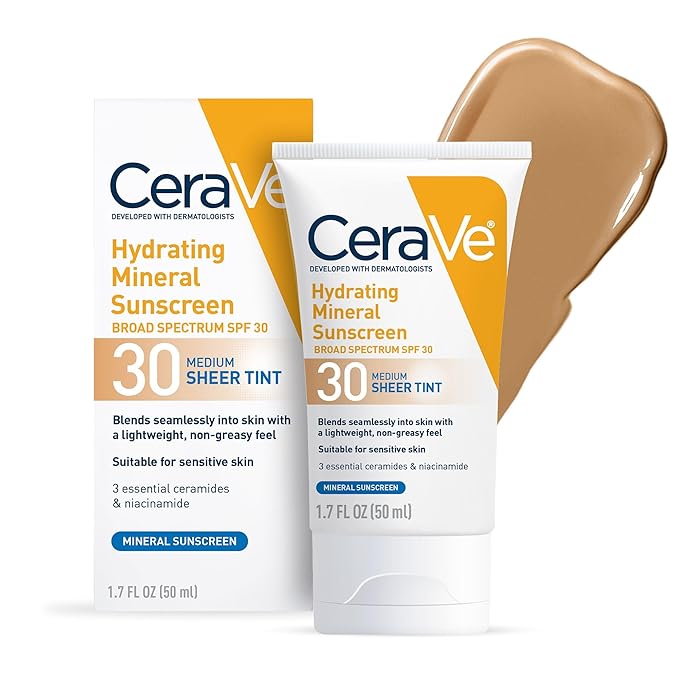
The CeraVe listing inspected here is Hydrating Mineral Sunscreen SPF 30 Face Sheer Tint in the medium shade, with one 1.7-fluid-ounce tube. The manufacturer lists zinc oxide and titanium dioxide as active sunscreen ingredients and iron oxides among the inactive ingredients.
This is a candidate when you specifically want a tinted facial product and medium is a shade you want to examine. It is not a universal shade recommendation, and the manufacturer’s wider range includes other shades that need their own matching decisions.
Shade suitability is a genuine limitation of buying from a screen. We did not try this tint on different complexions, so the product photograph and a shade name cannot establish how it will look on you.
The manufacturer directs you to use a water-resistant sunscreen for swimming or sweating. That makes this a different use case from automatically choosing the water-resistant lotions above for an active outdoor day.
Do not apply less than directed simply to make a tint look subtler. If the amount needed for proper use does not fit your cosmetic preference, reconsider the product choice instead of treating sunscreen like a tiny dab of optional color.
Read three parts of the package together
The SPF number, broad-spectrum description, and water-resistance instructions answer different questions. Keep them together when comparing products rather than choosing the highest number and ignoring how the sunscreen is supposed to be used.
Read the active ingredient panel and warnings on the package you receive. A retailer’s listing can contain several sizes or related products, and manufacturers can update formulas, so the physical label remains an important final check.
For example, the medium-tinted CeraVe product here is a facial sunscreen with a shade decision attached. The untinted lotions remove that specific matching question, but their finish and comfort still require personal evaluation.
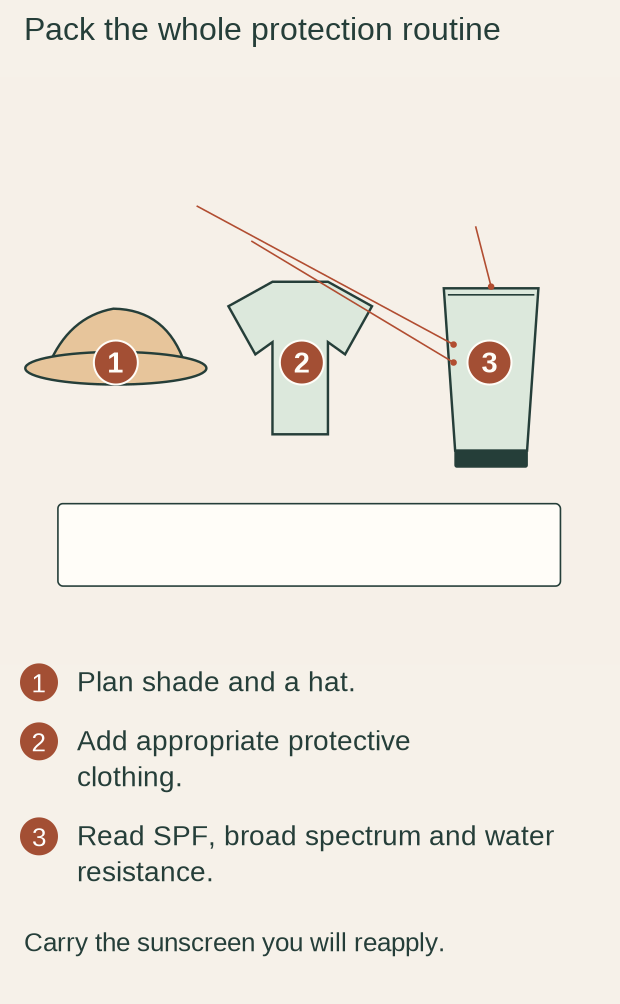
Sunscreen belongs with protective clothing and shade. Original planning illustration; follow the actual product label.
Plan the second application before the first purchase
Imagine where you will be when reapplication becomes necessary. If your sunscreen stays in a bathroom while you spend the afternoon outdoors, the purchase has not solved the practical problem of having it available.
Keep the current product directions with the bottle instead of relying on a remembered social-media rule. The AAD advises applying sunscreen before heading outside and reapplying at least every two hours outdoors, with swimming or sweating requiring attention to the water-resistance label. (AAD: How to apply sunscreen)
If you wear makeup, consider how you will manage the directions during the day without assuming the morning application lasts forever. You may need to plan a place and time to reapply rather than choosing a product solely for how it looks at breakfast.
Shade, a hat, and protective clothing can also affect what your day requires. They are practical parts of sun protection, not accessories you must postpone until you find a perfect sunscreen texture.
Buy a manageable amount and check the exact version
Compare current unit prices only after confirming the SPF, tint, tube size, and quantity. A discounted multipack of a different version may be a poor match for a reader who is trying one formula for the first time.
Choose a manageable initial quantity if you still need to evaluate finish or shade. You can buy more once you know how the actual product fits your routine, without assuming a sale justifies several unopened tubes.
Keep the package identity in your shopping notes if you switch between stores. Recording the full name, SPF, tint, and amount helps you compare matching offers instead of accidentally treating a different sunscreen as the same purchase.
If you have repeated reactions or a condition affecting your sun-care choices, ask your clinician which features to prioritize. A research-based shortlist can organize the buying decision, but it cannot identify the cause of symptoms or promise a reaction-free formula.
Your useful next step is to choose one relevant format and read its complete current directions. The right purchase supports a workable protection routine, including reapplication and other protective measures, rather than ending the conversation at the checkout button.
Photo Credits
- An everyday care setting; no product trial or endorsement implied. Photograph: Anna Tarazevich / Pexels.