A new moisturizer can look like a small change until you put it all over your face and wonder whether it suits you. Before introducing a new cosmetic widely, you can follow a cautious home use test and keep the rest of your routine understandable.
This is a way to observe your response to a product, not a medical allergy test. A quiet test spot doesn’t promise that the formula will work for every area, every purpose, or every future use.
Understand what you’re doing
The American Academy of Dermatology recommends testing skin-care products before adding them to your routine. Its home approach uses a small area and repeated applications, giving you a chance to notice a reaction before broader use.
Medical patch testing is different and may help a dermatologist investigate a suspected allergy. Don’t describe your home observation as proof that you have ruled out allergy, or use it to diagnose a reaction you already have. (Patch testing can find what is causing your rash)
If you have a prescribed treatment, a known allergy, active symptoms, or instructions from your clinician, ask what applies to that situation. This general cosmetic routine shouldn’t replace product-specific or professional directions.
Read before opening a new experiment
Find the product’s directions and warnings before you choose a test spot. Confirm whether it is meant to stay on or be rinsed off, and whether the label includes restrictions relevant to your intended use.
Keep the original container and outer carton long enough to record the product clearly. A picture of the name, ingredient list, and package details is easier to retrieve later than a vague memory of a white tube.
If the directions are missing or unreadable, get clarification before applying the product. A home test can’t make an unidentified or poorly understood item a sensible experiment.
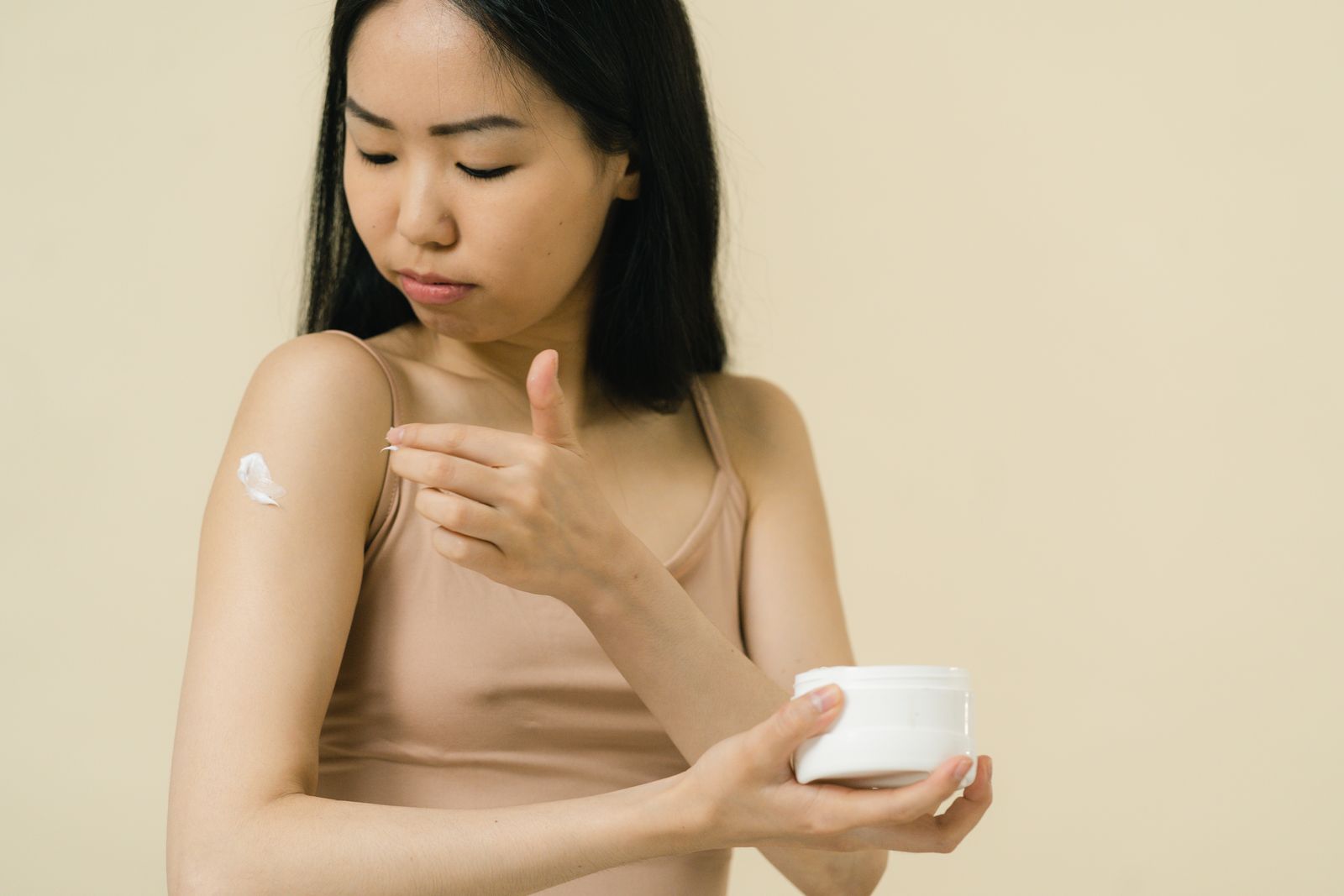
Stock scene of arm care; the photograph does not demonstrate the recommended test amount, timing, or a medical test.
Follow one verified approach
The AAD describes applying the product twice a day for seven to ten days to a quarter-sized spot, such as the underside of your arm or the bend of your elbow. Use the amount and thickness you would ordinarily use.
Leave it on for its normal contact time; for a rinse-off product, the AAD describes five minutes or the time stated in its instructions. Follow the actual product directions rather than extending contact to make the test seem more thorough.
If you develop a reaction, gently wash the product off and don’t use it again. The AAD advises seeking a dermatologist’s help for a severe reaction that isn’t relieved by the measures it describes.
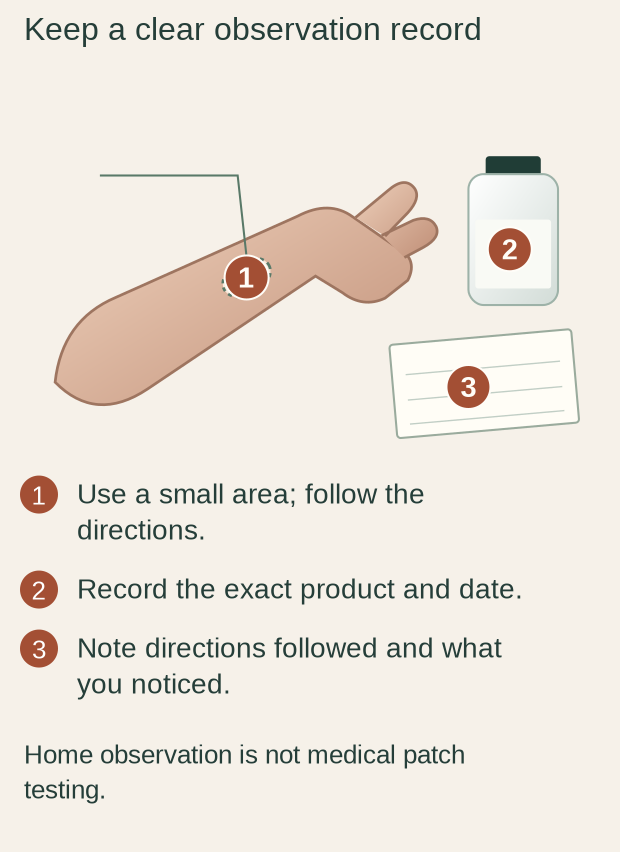
Concept illustration of a small observation area and product record; do not cover it with a medical-looking test patch.
Make the observation easy to remember
Put a short reminder somewhere you already check, such as your personal calendar. Label it with the product name so it doesn’t become an unexplained alert a few days into a busy week.
Your note might read “new body lotion, inner arm, morning and evening observations.” The reminder is an organizational aid, not permission to continue if you notice discomfort or a reaction.
Don’t turn this into a competition for perfect adherence. If travel or a disrupted week makes the record unclear, pause and ask for advice when needed rather than inventing missing applications in your notes.
Keep the product somewhere identifiable and appropriate according to its label. Avoid leaving an unmarked decanted sample beside similar containers, since you want to know exactly what you used.
Record observations without diagnosing them
Useful notes describe what you can see or feel, when you noticed it, and whether the product was washed off. “Itchy at the application area after the evening use” is more useful than “ingredient X is definitely an allergen for me.”
If you take a photograph, use consistent ordinary lighting and keep the date. Don’t edit the image to make a change look more dramatic, and don’t assume a photograph captures every sensation you experienced.
You can also record “nothing unusual noticed” without turning that into a safety certificate. The record describes your observation at that time, with the product and conditions you actually used.
Don’t repeatedly touch, scratch, or manipulate the area just to see whether you can produce a visible result. The point is to notice your experience, not to manufacture a stronger test.
Keep the rest of the routine understandable
Choose one new item instead of starting a whole collection together. If you add a cleanser, serum, mask, and moisturizer during the same week, you give yourself several changes to describe if something feels wrong.
You can leave the other new purchases unopened while you decide what comes next. Their place on your shelf doesn’t create an obligation to introduce them before you have clear information about the first product.
Keep a separate list of your usual products so you don’t accidentally report the new item as your only exposure. The list provides context for a conversation; it doesn’t establish which product caused a symptom.
If someone shares your bathroom, let them know which item you are keeping track of. That reduces ordinary mix-ups, especially if several containers look almost identical.
Decide what the result actually supports
If you notice no reaction during the AAD’s observation period, its guidance says you can proceed with using the product. Keep following its label and pay attention to your experience rather than assuming the test guarantees future tolerance.
Don’t jump from “no reaction noticed” to “this will fix my skin concern.” Whether you like a texture, can follow the directions, or want to keep buying the product is a separate practical decision.
A small test also doesn’t compare the product against everything else in the store. You haven’t established that it is better, gentler, or more effective than another formula simply because this observation was uneventful.
Have a clear plan if something happens
Stop the home experiment when a concerning reaction occurs instead of applying more to double-check it. Keep the container and your notes available so you can explain what was used and what happened.
If symptoms are severe or you feel unwell, get prompt medical help rather than waiting for an online reply. For a nonurgent but persistent or recurring problem, arrange an assessment with a qualified clinician.
Don’t use another person’s reaction photograph to name your own condition. Similar-looking changes can leave important questions unresolved, and a home product record is useful precisely because it preserves the facts without pretending to diagnose them.
Bring specific questions when you need help
You might ask whether the item should be avoided, whether medical patch testing is relevant, and what to do with your existing routine. Show the actual packaging or clear photographs so the conversation refers to the correct formula.
If a clinician gives you a plan, record it separately from your earlier observations. That keeps the professional instructions easy to follow without turning your old guesses into part of the plan.
You can also ask what would warrant another appointment and how to introduce future products. The answer should reflect your circumstances, rather than a generic timeline borrowed from someone else’s routine.
Separate practical questions from the test
Keep a second note for ordinary preferences, such as whether the cap is awkward or the texture feels inconvenient under clothing. Those observations can help you decide whether you want the product without turning a comfort preference into a medical result.
If you decide you dislike the package, you can stop considering it even if you noticed no reaction. Completing an observation does not obligate you to use up a product or recommend it to anyone else.
If someone asks whether you tested it, explain that you made a limited home observation. That wording avoids implying a laboratory comparison, dermatologist-supervised assessment, or broad guarantee.
Keep the finished record small
A useful record fits on one screen: exact product, start date, application area, directions followed, observations, and any action you took. You don’t need a spreadsheet full of scores you can’t interpret.
Store it with the label photo if you decide to keep the item. If a later purchase looks different, you’ll have a concrete reference for what you previously used.
The best habit here is caution with clear information. You give yourself time to notice, avoid turning a simple observation into a diagnosis, and ask for help when the question becomes medical.