The best storage spot for your skin care is usually a place where you can follow the package instructions and remember what you own. A beautiful arrangement loses its appeal if sunlight hits the bottles all afternoon or you cannot tell which half-used tube is the newest.
You do not need a special refrigerator, a complicated spreadsheet, or a perfectly styled cabinet to get organized. Start with the actual labels, make the daily products easy to identify, and build a replacement habit that does not depend on guessing from the front of a jar.
Read what the package actually asks you to do
Look for storage directions, a printed expiration date where provided, and any information about use after opening. Keep those details with the product instead of discarding the carton before you have checked whether it contains information missing from the container.
FDA explains that ordinary cosmetics do not have a single legally required US shelf life or a general requirement to print an expiration date. That does not mean a cosmetic stays usable indefinitely or that a missing date guarantees it is still appropriate to use (FDA shelf-life guidance).
Sunscreen is handled differently because it is an over-the-counter drug in the United States. FDA advises discarding it after a printed expiration date, or three years after purchase if no date is provided, and discarding it if you do not know its age (FDA sunscreen expiration guidance).
Avoid assigning every bottle the same replacement deadline because a chart online says skin care lasts a fixed number of months. Ask the manufacturer about the exact product when the package does not answer your question.
Choose a home for everyday products
Walk through the places where you currently leave bottles: the shower ledge, sink, bedroom shelf, windowsill, work bag, and car. Compare those locations with the directions on each product rather than deciding that one fashionable organizer must suit everything.
FDA’s cosmetics shelf-life guidance identifies heat, moisture, sunlight, air, and contamination during use among factors that can affect products. A location that avoids needless exposure and lets you close containers properly is a better starting point than an arrangement built only for photographs (FDA storage guidance).
For example, you might keep a small everyday set in a cupboard away from a sunny window. Store the rest together in another appropriate place so that opening a drawer does not reveal five forgotten copies of the same moisturizer.
Think about who can reach the shelf as well as how it looks. Follow any child-safety warnings and keep products away from anyone who might mistake them for food, toys, or something intended for a different use.
A tray can make a shelf easier to wipe and help you notice a leaking cap. It is an organizational aid, not a promise that a product is protected from every storage problem.
Make the opening date easy to remember
If remembering dates is difficult, write the opening date on a small label placed where it will not cover the instructions, lot code, or expiration date. Use that note as a memory aid rather than a home-made replacement for the manufacturer’s guidance.
You can keep a phone note instead if a label would not stick to the package. Record the full name, opening date, and any relevant directions, so the note still makes sense after you buy another version of the same product.
A simple system is more useful than a perfect one you stop maintaining. You do not need to log every application; the aim is to avoid wondering whether an unfamiliar tube was opened last week or last year.
When you purchase a replacement, store it apart from the bottle you are currently using. That physical separation helps you avoid accidentally opening both, especially when their packaging looks identical.
If several people share a cabinet, agree on one labeling method. Initials and an opening date may be sufficient, provided the arrangement does not hide the product’s original identifying information.
Keep handling easy to follow
Keep the product’s handling directions within reach, especially when the container and carton carry different details. If a reusable accessory belongs with one item, give it a consistent storage place so you can identify it without searching through the rest of your kit.
Make sure the cap returns to the right bottle and closes securely. If your routine leaves several jars open while you search for a missing lid, simplifying the number of products on the counter may help you handle them more consistently.
For a jar, read the manufacturer’s handling method before adding another accessory to the routine. You can keep the instructions with a photograph of the package, so a tool bought later does not quietly replace the directions that came with the actual product.
Travel can make these details easier to overlook. Pack original labeled containers when practical, check caps before leaving, and keep a leaking product from becoming a shared mess inside the rest of your kit.
When a product needs replacing, write down the exact version before shopping. Keep the old item separate from your everyday set while you resolve a question, rather than putting an unidentified container back beside the bottle you intend to use.
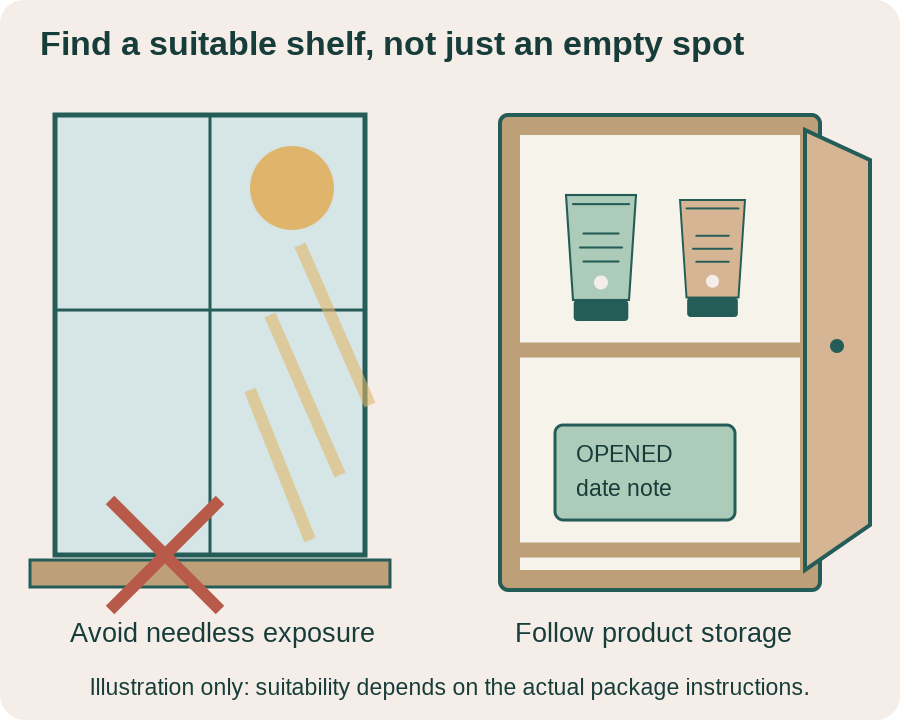
Original concept illustration. A sunlit window ledge marked as avoidable exposure beside a cupboard holding closed tubes and an opening-date note. It is not a clinical assessment or a product certification.
Recognize changes without pretending you have a lab
Notice an unexpected change in smell, color, texture, separation, or the condition of the container. FDA describes these kinds of changes as possible consequences of cosmetic deterioration, so do not automatically dismiss them because you have not reached a date you wrote on a sticker (FDA deterioration information).
At the same time, normal appearance is not a safety test. You cannot certify that a product is fine simply by sniffing it or seeing whether it still feels smooth on your hand.
If a change worries you, stop using that item and contact the manufacturer with the full name and lot code. A clear photograph of the package and a description of how it was stored can make the question easier to answer.
Some products have specific instructions to shake before use or descriptions of normal variation. Check those instructions without using them as a blanket explanation for an unfamiliar change in every product you own.
If you have symptoms after use, deal with the symptoms rather than focusing only on saving the bottle. Follow the label’s warnings and seek appropriate medical advice; storage notes may help explain the history but cannot diagnose a reaction.
Avoid turning the car into a second bathroom shelf
A spare bottle in the car can feel convenient, but convenience does not overrule storage directions. Choose a reminder to bring the products you need rather than assuming that a permanent car stash will stay suitable through changing weather.
For a day trip, decide where the kit will go when you leave the vehicle. You may need to carry it with you instead of leaving it on a seat or dashboard while you spend hours somewhere else.
If a product has been stored outside its instructions, ask the manufacturer what to do and replace it when necessary. You cannot reverse a questionable storage history by moving the bottle to a cooler shelf today.
The same logic applies to a sunny windowsill that looks attractive in a bathroom photo. Arrange the room around appropriate storage, then choose decorative items for the places that are less suitable for your everyday products.
Create a small review habit
Choose an occasional moment, such as before packing for a trip, to check dates, labels, and which containers are actually in use. Remove items you cannot identify and resolve questions before putting them back among your daily essentials.
Make a short replacement list instead of immediately buying every product you remove. You may discover that you only need one practical moisturizer or a fresh sunscreen, while the rest of the crowded shelf was doing little for your routine.
Keep the system modest enough that you can repeat it: directions first, sensible storage, identifiable packages, and clear purchase or opening notes where helpful. That gives you a workable cabinet and a more reliable reason for replacing something than either guilt about waste or a guess based on its price.
Photo Credits
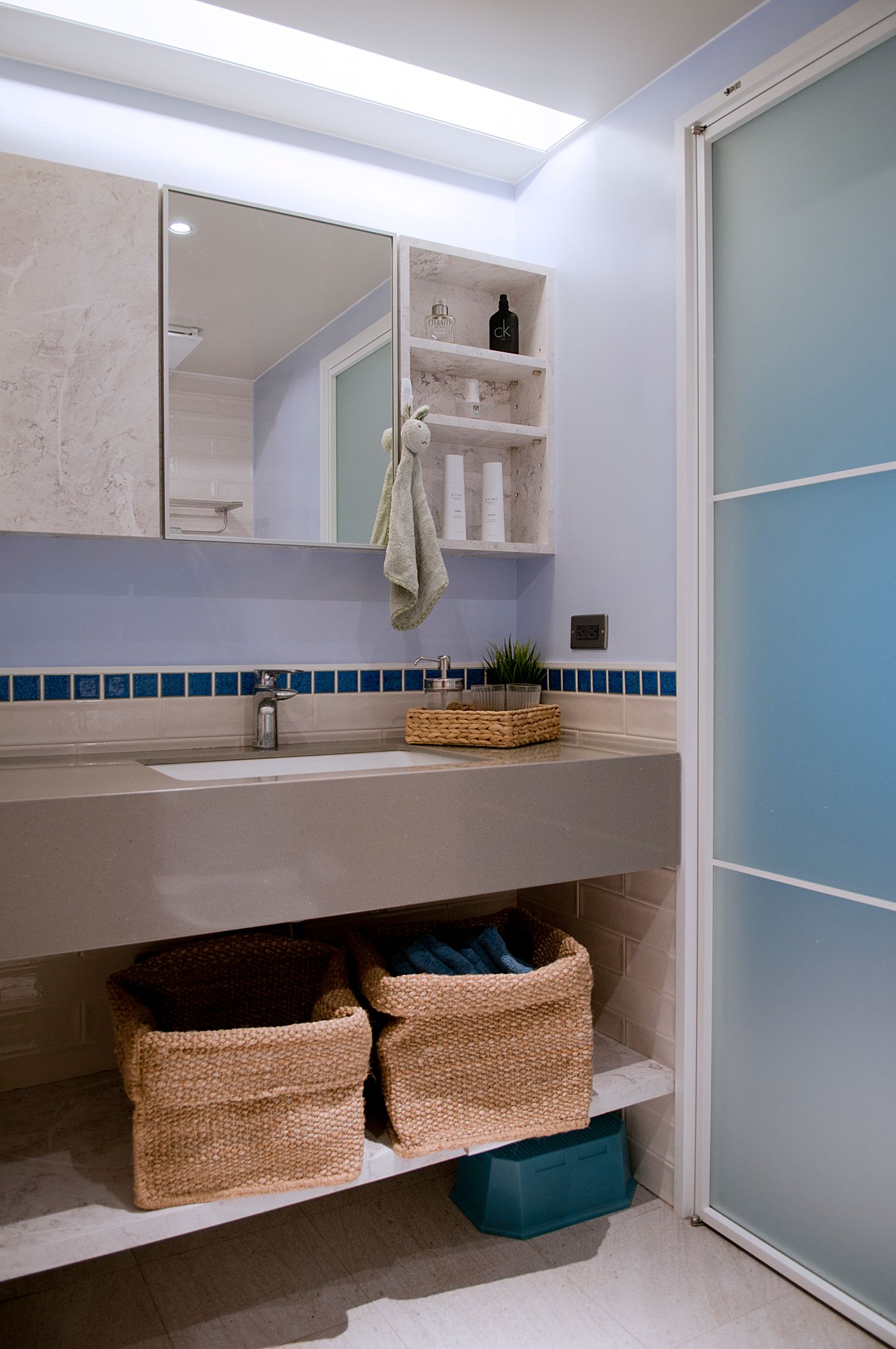
- A real bathroom gives you several possible storage locations; follow each product’s instructions when choosing one. Photo: 顯全 黃, Pexels.