An after-shower routine works best when you can finish it without hunting for a towel, balancing on a wet floor, or opening a complicated line of products. For dry-feeling skin, start with a gentle wash, a gentle dry, and a suitable moisturizer placed where you will actually use it.
You do not need to turn the bathroom into a spa or follow a perfect countdown. You need a repeatable arrangement that fits your space, your mobility, and the rest of your day.
Set up before you turn on the water
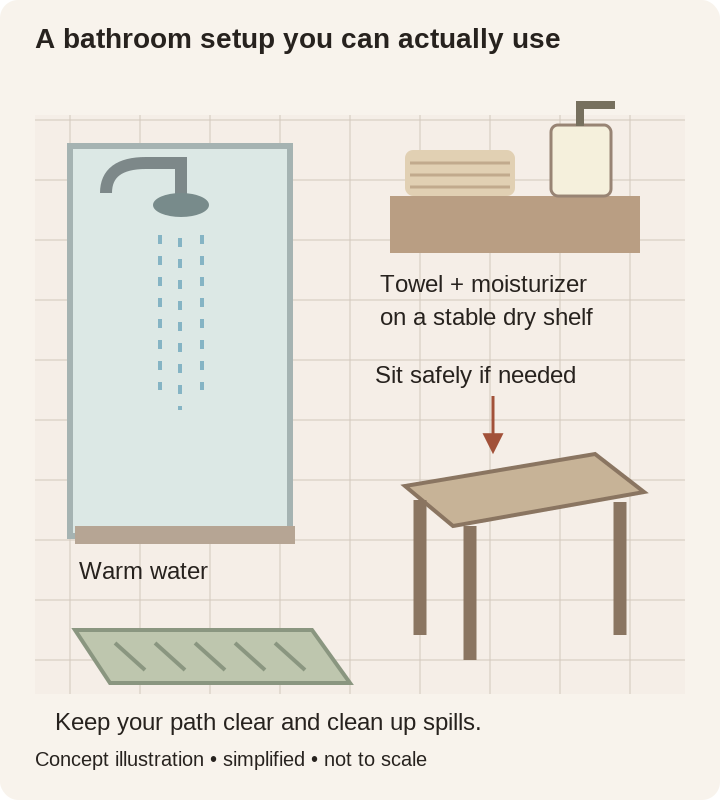
Put a clean towel, your usual moisturizer, and the clothes you plan to wear within safe reach. A stable shelf or dry counter is more useful than leaving a bottle on the shower floor where you could knock it over.
Check that the route out of the shower is clear and that your mat lies securely. If you need help reaching a body area or standing comfortably, plan around that need before you are wet and rushing.
You can simplify the product selection too: keep the item you actually use accessible and store optional extras elsewhere. A row of nearly identical bottles makes a tired evening harder without making the routine more useful.
This setup is an organizational suggestion, not a treatment protocol. Adapt it to your bathroom and any safety or care guidance you already follow.
Keep the wash comfortable
The American Academy of Dermatology recommends warm rather than hot water and limiting baths or showers to five to ten minutes when you are trying to relieve dry skin. It also advises a gentle cleanser and avoiding unnecessary heavy lather. (AAD: Dermatologists’ top tips for relieving dry skin)
You can use those principles without watching a clock in alarm. If you tend to stay under very hot water while deciding what to do next, choose your products and finish the practical planning beforehand.
Follow the cleanser’s directions and your normal hygiene needs rather than assuming that more foam means a better result. You also do not need to scrub a dry-feeling patch to prove that it is clean.
If you have a clinician’s bathing instructions for a skin condition, follow those instead of substituting a generic routine. Everyday cosmetic advice cannot determine the right care for an unexplained rash or a particular treatment plan.
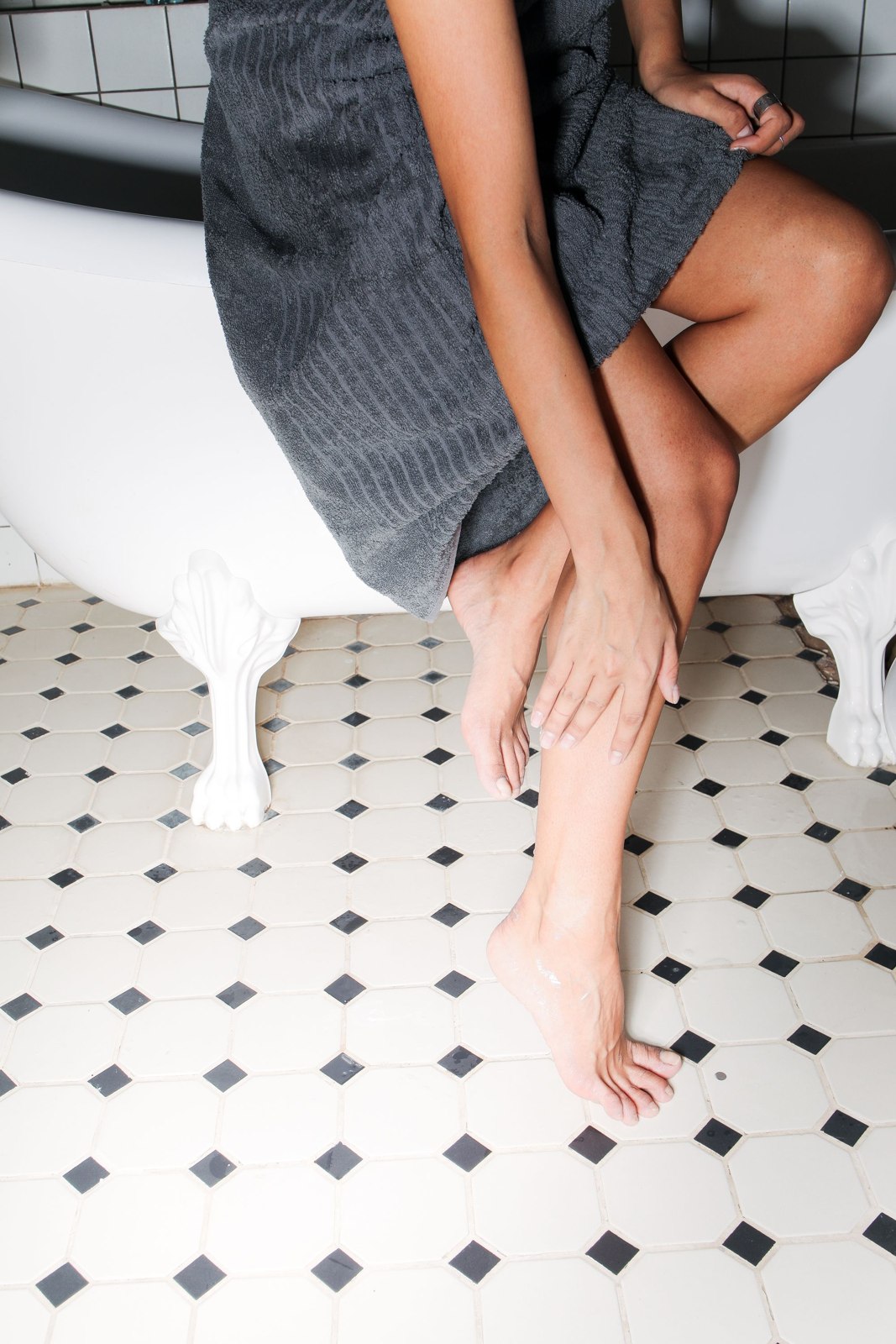
Pat instead of polishing
After washing, use the towel to gently pat your skin rather than rubbing hard. The AAD recommends applying moisturizer while the skin is still damp, and the NHS similarly emphasizes prompt application after gently drying. (NHS: Emollients)
Damp does not mean that you need to leave pools of water on the floor or stand dripping while opening a jar. You can get safely situated, remove excess water gently, and move directly into the next step.
If your hair routine usually keeps you occupied for a long time, consider whether you can do the brief body-care step first. That small rearrangement may be more workable than trying to remember moisturizer later in a different room.
You do not need a special towel to start. Choose one that is clean, manageable, and comfortable for you, and avoid treating rough friction as a necessary part of drying.
Work around your actual reach
It can help to think in ordinary sections: arms, torso, and legs, with whatever assistance or adaptation you need. This is a memory aid rather than a map of exact doses or a requirement to cover every surface with one product.
Follow the moisturizer’s intended-use directions, including any areas it says to avoid. A body moisturizer is not automatically appropriate for the eyes, mouth, genitals, or an open wound.
Do not stretch awkwardly over the bath or stand on one leg to reach a shin if that feels unstable. You can sit in a safe, dry place or ask for help rather than making the application a balance exercise.
For a hard-to-reach area, discuss suitable options with a pharmacist or your care professional. A product’s appealing packaging does not make an awkward movement safer.
Choose a texture that fits getting dressed
Your most useful moisturizer is one you can tolerate in the circumstances where you need it. If you avoid a very greasy finish on busy mornings, acknowledge that problem when choosing a suitable formula.
A larger package is helpful only when you can hold it, dispense from it, and store it easily. You might prefer a pump on a stable surface or a tube you can manage with less twisting.
Keep the package exterior dry enough to grip, and close it when you finish. If you spill product, deal with the slippery surface before walking across it or leaving the bathroom for someone else.
Do not mix moisturizer into your sunscreen, prescription treatment, or another bottle to save time. A shorter routine should come from fewer unnecessary steps, not from changing how a labeled product is meant to be used.
Build two versions of the routine
On a relaxed evening, you might have time to moisturize at a dry seat beside the bathroom and then dress at your own pace. On a busy morning, you might want your usual moisturizer next to your towel and clothes.
Both versions can share the same essential sequence, so you do not need separate shelves of products. The difference is where you place the items and which distractions you remove.
If you usually forget after-shower care because your phone takes your attention immediately, leave it outside the small area where you finish. A simple reminder attached to an existing habit may be easier than another app notification.
You can also move an optional task later, such as choosing jewelry or sorting laundry. The point is to preserve a manageable place for moisturizing without turning the whole morning into a rigid schedule.
Troubleshoot the part that actually breaks down
If you keep forgetting, check placement before buying anything. A bottle hidden behind cleaning supplies is easy to overlook, while a safely stored product beside your clean towel makes the next step more obvious.
If you keep skipping because the routine feels sticky or slow, revisit the texture and package. Write down that concrete inconvenience so you can explain it when asking for a suitable alternative.
If your product is nearly empty and difficult to dispense, solve that problem before it becomes a daily frustration. Avoid adding water to stretch it or transferring it into an unclean container.
If you cannot comfortably reach or manage the application, ask for help with that specific task. An accessible routine matters more than copying someone else’s bathroom arrangement.
Keep an ordinary record if discomfort continues
You can note when the dry feeling appears, which body areas are involved, and what products you used. A short factual note is more helpful than trying to assign yourself a skin diagnosis.
For example, record that your lower legs felt tight after a particular shower, rather than writing that you have proved a damaged barrier. If there is a visible change, a clear dated photo may help you explain the timeline to a clinician.
Do not keep making several new product changes to solve symptoms that are getting worse. That can make the sequence harder to describe and postpone advice you actually need.
Persistent dryness, pain, cracking, bleeding, or a rash deserves professional assessment, especially when ordinary care is not helping. You do not have to wait until discomfort interferes with sleep or daily tasks to seek help.
Leave the space ready for next time
Return the moisturizer to its safe place, hang the towel where it can dry, and clean up residue on the floor or counter. This small reset prevents tomorrow’s routine from starting with a search or a slippery surface.
Check the product label periodically rather than relying only on a memory of what you bought. If you replace a bottle, make sure the new version is the one you intended and read its current directions.
A routine you can repeat does not need to look impressive in a photograph. When your towel, moisturizer, and safe place to finish are already arranged, after-shower care becomes a short, practical part of getting ready.
Photo Credits
- A safe place to finish and accessible supplies make after-bathing care easier. Stock photograph by Polina Tankilevitch; illustrative context.