If you’re seeking an effective nail fungus treatment, these products offer fast-acting antifungal action, deeper penetration, and options suitable for toenails and fingernails. This guide highlights practical choices for different buyers—busy shoppers needing quick-dry formulas, users seeking strong antifungals, and those prioritizing visible nail restoration. The top picks below focus on clear application, targeting fungus at the source, and restoring healthier nails over time.
Summary table of selected products:
| Product | Best For | Key Benefit | Estimated Application |
|---|---|---|---|
| DERMATOOL Toenail Fungus Treatment | Rapid relief and clear nail restoration | Extra-strength tolnaftate delivery; fast-drying, non-staining | Daily applicator brush |
| Fungi-Nail Anti-Fungal Liquid | Precise application around nails | Clinically proven; stops spread; dual-action protection | Direct pinpoint applicator |
| VTROUY Toenail Fungus Treatment | Deep penetration and nail repair | 25% undecylenic acid; tea tree oil blend | Liquid formula with fast absorption |
| OSIMOON Maximum Strength | Severe or thick nails | High potency; reaches under the nail plate | Liquid formula |
| SAVILAND Extra Strength | Two-sided care and growth | 25% undecylenic acid + 1% tolnaftate; dual-action | Comes with nail care tools |
DERMATOOL Toenail Fungus Treatment Extra Strength

Best for: Quick-action relief and clear, dry application. This product targets fungus at its source with an easily absorbed delivery system and an extra-strong tolnaftate formulation. It dries fast, goes on clear, and is non-staining, making it suitable for daily use and wear with open-toe footwear. Caution: Some users with sensitive skin should monitor for irritation at the application site.
Fungi-Nail Anti-Fungal Liquid Solution

Best for: Precise application around infected areas with a clinically proven formula. This product focuses on curing and preventing fungal infections, stops spreading, and includes a triple-action approach with aloe and tea tree oil to support skin recovery. Caution: Contains active antifungals; avoid if you have known sensitivities to tolnaftate components.
VTROUY Toenail Fungus Treatment Extra Strength
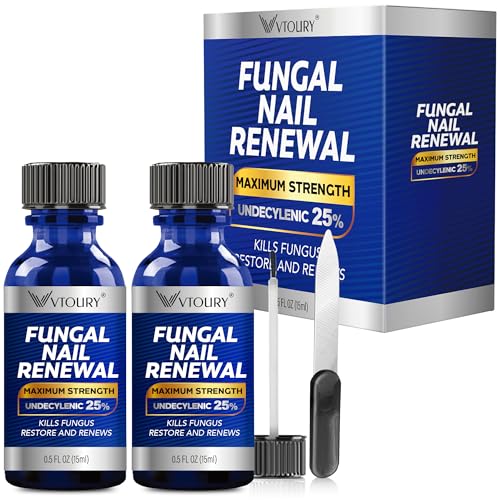
Best for: Deep-penetrating formula with undecylenic acid and tea tree oil. This treatment targets fungus at the root and supports nail integrity for healthier regrowth. Caution: Performance can vary with very thick or severely damaged nails; gradual use is recommended for best results.
Tobcharm Toenail Fungus Treatment Extra Strength

Best for: Innovative extra-strength formula combining modern science with natural components to remove fungus around and under the nail. It aims to restore damaged nails and is described as safe with no reported side effects. Caution: Claims are broad; users should monitor for any skin reaction and follow directions for use.
OSIMOON Maximum Strength Toenail Fungus Treatment

Best for: Severe, stubborn nail fungus with thick or brittle nails. The high-potency formula reaches beneath the nail plate to deliver antifungal action where creams often fail and supports healthier nail regrowth. Caution: High potency — use as directed and consider consultation for long-term use with sensitive skin.
Kerasal Multi-Purpose Nail Repair

Best for: General nail repair and appearance improvement. While not a dedicated antifungal medication, Kerasal uses keratolytic urea with hydrating ingredients to reduce discoloration and thickness, helping nails look healthier while fungus is treated. Caution: May not be sufficient as a sole antifungal for active, ongoing infections.
SAVILAND Extra Strength Fungus Treatment

Best for: Dual-action formula with 25% undecylenic acid and 1% tolnaftate, designed to combat fungus and strengthen damaged nails. Comes with a complete nail care kit for easy, at-home use. Caution: Results may vary based on degree of nail damage and thickness; consistent application is important.
Buying Guide: Nail Fungus Treatments
What should I look for in a nail fungus treatment?
Key factors include active ingredients, ease of application, and penetration depth. Look for antifungal agents like tolnaftate or undecylenic acid, plus supporting oils or moisturizers that aid skin health around nails. Consider whether the formula targets both the nail plate and surrounding skin for comprehensive treatment.
How to choose based on nail condition?
For mild to moderate fungus, start with products that have fast-drying, clear application. For thick or stubborn nails, a high-potency liquid that penetrates beneath the nail plate is preferable. If the goal is nail appearance restoration, consider products that combine exfoliating or hydrating ingredients with antifungal action.
Is a dual-action or single-action formula better?
Dual-action products that address fungus and support nail health tend to provide broader benefits, especially for damaged nails. Single-action antifungals may work well for early infections but could be slower to improve appearance if the nail is already thick and discolored.
How long should I use these products?
Most guidelines suggest consistent daily application for several weeks, with gradual improvement as new, healthy nail grows in. If there is no improvement after a reasonable trial period, consult a healthcare professional for evaluation and alternative options.
What are common use cautions?
Avoid applying on broken skin or if you have known sensitivities to any active ingredients. Some formulas may cause skin irritation or a burning sensation. If irritation occurs, discontinue use and seek medical advice.
FAQ
- Do these products cure nail fungus?
- Can I use these while wearing nail polish?
- Will these help with thick or discolored nails?
- Are there safety concerns for sensitive skin?
- Should I see a doctor for persistent infections?
- What is the best product for severe nail fungus?
They provide antifungal action and support nail health; effectiveness depends on infection severity and consistent use over time.
Many formulas dry clear and are compatible with open-toe footwear, but check product directions for any layering restrictions.
Some products target thickness and discoloration as nails grow out, while others focus primarily on fungus control. Look for formulas that mention nail repair or exfoliation.
Active antifungals can irritate sensitive skin. Start with a patch test on a small area and discontinue if irritation occurs.
Yes. If there is no improvement after several weeks or if the infection worsens, seek medical evaluation to rule out other conditions.
Products advertised as maximum-strength or with deep-penetration formulas are often recommended for stubborn infections, paired with a long-term plan for nail regrowth.