When cold weather makes your skin feel less comfortable, you usually do not need to replace every bottle at once. Start by identifying where the trouble appears, then adjust the part of your routine or surroundings that actually needs attention.
Your winter may mean windy school drop-offs, a heated office, long outdoor shifts, or a mild climate with an occasional cold spell. A useful plan begins with those real circumstances rather than a shopping list tied to the calendar.
Follow your day from outside to inside
Think about the places you spend time and what touches your skin in each one. You might move from a cold walk into a heated train, then sit beside an office vent before returning to a warm house.
The American Academy of Dermatology explains that cold conditions and lower humidity can make retaining moisture more difficult. Indoor heating can add another drying environment, so the issue is not always limited to the minutes you spend outdoors. (AAD: Cold weather and your skin)
Write down the setting where you first notice discomfort rather than guessing immediately at an ingredient problem. You are collecting useful context, not proving that weather is the cause of every change.
If the same patch is repeatedly painful or irritated regardless of setting, do not dismiss it as ordinary winter skin. You can ask for professional advice before making a whole season of adjustments.

Keep what still works
Look at your routine in terms of useful jobs: cleansing, moisturizing, and protecting yourself during outdoor time. If a familiar product remains comfortable and suitable, colder weather does not automatically make it obsolete.
You can identify one change at a time, such as making moisturizer easier to remember or choosing a more substantial texture for an area that feels dry. The AAD specifically notes that you do not need to change every product when the season changes.
Avoid buying a complete winter collection before checking the products you already own. A new cleanser, toner, serum, oil, mask, and cream create many simultaneous variables and a much longer routine.
If you have prescribed skin care, keep that plan in view while making cosmetic changes. Ask the prescribing clinician or pharmacist before altering frequency or adding something around a treatment.
Make clothing comfortable against your skin
Notice collars, cuffs, gloves, and other repeated contact points as you dress. A rough sweater may be easy to tolerate over a comfortable layer even when you dislike its feel directly against your neck.
The AAD suggests soft fabrics and fragrance-free laundry detergent when dry or raw skin makes clothing irritating. You can apply that idea by checking the layers you already wear rather than assuming you need a specialized wardrobe.
Keep gloves where you can find them before heading outside. An extra pair in your usual bag may be more useful than a perfect pair left in a drawer on the day you need it.
If a fabric or laundry product seems linked to irritation, record the actual item and timing. Do not conclude from one uncomfortable afternoon that you have identified an allergy.
Put hand and lip care near their real uses
Your hands encounter washing, household tasks, bags, doors, and the weather throughout the day. Think about where a suitable moisturizer would be easiest to reach after your normal washing routine.
A tube beside a dry sink area or in a work bag may be more useful than a large container stored far away. You can prefer different packages for different places without multiplying the number of formulas you use.
For lips, keep a suitable balm where you will remember it before going out. Read its directions and any sunscreen labeling rather than assuming every lip product offers sun protection.
Do not describe an ordinary balm or hand cream as a treatment for unexplained sores, infection, or persistent cracking. Those problems need assessment when they are not improving or are concerning.
Look at the room before adding a product
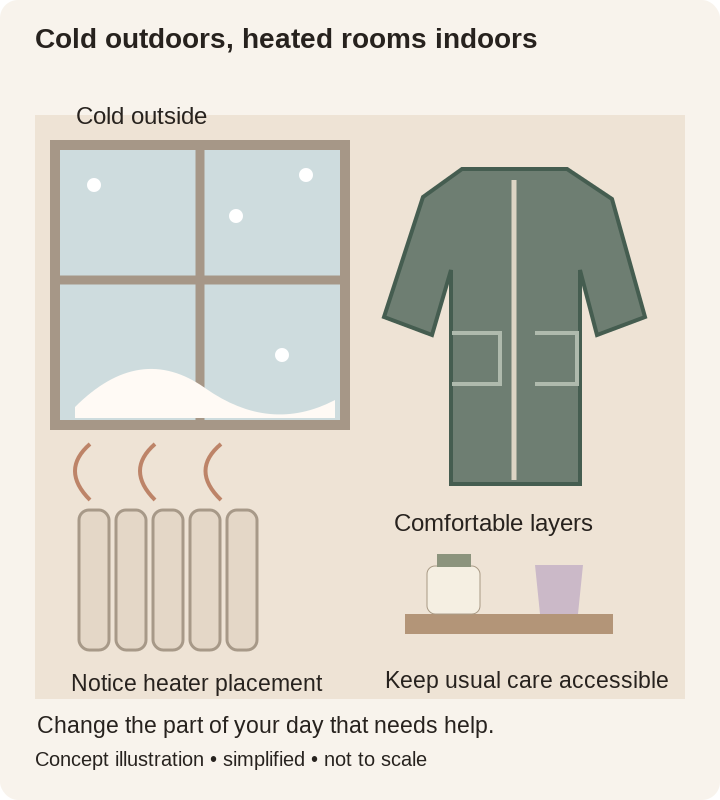
If you often sit immediately beside a heater, think about whether your chair or desk can move without creating another problem. You might also prefer a comfortable clothing layer rather than turning the heat higher whenever you feel cool.
The AAD notes that a humidifier can help add moisture to dry indoor air. If you use one, follow its cleaning, placement, and operating instructions rather than treating a neglected tank as a set-and-forget solution.
You do not need to buy a room appliance simply because winter has arrived. First decide whether it solves a real issue in a space you actually use and whether you can maintain it properly.
Keep skin products in the conditions their labels require, away from an obvious heat source or a spot where they may freeze. A windowsill that looks attractive is not automatically a suitable storage location.
Revisit the hot-shower habit
A long, hot shower can feel inviting after time outside, but the AAD recommends warm water for dry skin. Make the transition into a comfortable bathroom without automatically choosing the hottest setting.
Prepare a clean towel and your usual moisturizer beforehand so you can finish without hurrying between rooms. This is a small change in arrangement rather than an extra treatment step.
If your evening routine usually becomes a long series of optional scrubs and masks, consider whether all those steps still feel useful. You can leave optional products out while getting advice about anything prescribed.
Do not scrub at visible flakes to make them disappear for the evening. That appearance can be frustrating, but adding friction is not a reliable answer to the underlying reason your skin feels uncomfortable.
Plan for an ordinary workday
Suppose your hands feel fine at home but uncomfortable halfway through an office day. You can note the washing products available, how often your hands get wet, where you sit, and whether you remember your usual hand moisturizer.
That note creates several practical questions before you buy a stronger-sounding product. You might need a more convenient package, appropriate task protection, or advice about a cleanser you cannot easily change.
If your work requires gloves, frequent washing, or contact with irritants, follow workplace safety instructions and raise persistent skin problems with the appropriate professional. Do not change required protective practices based on a general skin-care article.
For an outdoor day, prepare clothing and supplies before you leave rather than relying on a product in your bathroom afterward. Moisturizer does not replace clothing or the other protections your setting requires.
Keep a small, useful observation record
Write down the area affected, what you noticed, and what changed in the routine. A sentence such as hands uncomfortable after washing at work is more actionable than a vague statement that winter ruined your skin.
You can also keep a dated photo if there is a visible change you want to discuss. Use similar lighting when practical, but do not spend time trying to manufacture a dramatic before-and-after comparison.
Avoid adding multiple new products between every observation. If something worsens irritation, stop that experiment and seek advice rather than trying to counter it with another purchase.
You are looking for a manageable routine and useful information, not proof that you can diagnose the problem yourself. Bringing a concise timeline and actual product names makes a professional conversation easier.
Ask for help before the season becomes a struggle
The AAD advises seeing a dermatologist when home measures are not improving changing or uncomfortable skin. You do not need to wait for severe cracking, bleeding, or a loss of sleep to consider an appointment.
A new rash, persistent itch, pain, or repeated cracking should not be filed away as just cold weather. A clinician can help determine whether the explanation goes beyond ordinary seasonal dryness.
For your next practical step, choose one issue you can name clearly: a rough clothing layer, an inaccessible moisturizer, a hot shower habit, or symptoms that need assessment. Solving that specific problem is more useful than replacing your entire routine because the forecast changed.
Photo Credits
- Think about both outdoor exposure and the heated spaces you use afterward. Stock photograph by Tolga Aslantürk; illustrative context.