A skin-care label is easier to use when you read it with a question in mind. You don’t need to decode every unfamiliar ingredient before deciding whether a cleanser, moisturizer, or sunscreen belongs on your shortlist.
Start with what the product is, how you’re supposed to use it, and how much you get. Then check the details that matter to your particular purchase, keeping marketing promises separate from the instructions you actually need.
Find the product’s job first
Look for a plain description such as facial cleanser, body moisturizer, or sunscreen. If the front mainly offers poetic language about renewal and radiance, turn the package around before filling in the missing job yourself.
According to the FDA’s labeling summary, the main display panel identifies the product and its nature or use and states the net quantity. That gives you a practical starting point before you consider the more decorative claims.
Ask whether you want a rinse-off product or something that stays on your skin. A package that looks like a moisturizer may contain a different kind of product, and the directions matter more than the shape of its jar.
If you can’t find a clear purpose or readable directions, leave it off your shortlist until you can get reliable information. You don’t have to solve an incomplete label while standing in a store aisle.
Check the packaging before a product becomes part of your routine; the photograph illustrates everyday product handling.

Compare the amount inside
Read the net quantity rather than judging the box or bottle by its apparent size. A wide cap, heavy base, or large outer carton doesn’t tell you how much usable product you’re buying.
Use matching units when you compare prices. If two lotions contain eight and twelve fluid ounces, divide each purchase price by its stated fluid ounces rather than assuming the taller bottle offers better value.
For an example, a hypothetical eight-fluid-ounce bottle at sixteen dollars costs two dollars per fluid ounce. A twelve-fluid-ounce bottle at twenty-one dollars costs one dollar and seventy-five cents per fluid ounce, before taxes or delivery.
That calculation answers a price question, not a performance question. You may still prefer the smaller package if you’re trying an unfamiliar formula, have limited storage, or won’t use the larger one conveniently.
Use the ingredient list for specific checks
The FDA says cosmetic ingredients generally appear in descending order of predominance, with exceptions including ingredients at one percent or less and color additives. You can’t reliably calculate an ingredient’s exact percentage from its position.
Use the list to answer a focused question, such as whether it includes an ingredient your clinician told you to avoid. Copy the exact name from that advice rather than relying on a social-media list of ingredients that sound similar.
If you don’t have an avoidance list, don’t create one merely because a name is long or unfamiliar. Make a note of the question and look for a primary explanation instead of treating pronunciation as a safety test.
Keep the outer carton until you’ve recorded the information you need. On some packages, the useful details are easier to read there than on the smaller container you’ll keep beside your sink.
Recognize when another panel matters
Some products have both cosmetic and drug roles, including products intended to protect against sunburn. The FDA explains that these products must meet applicable requirements for both categories.
If the package includes Drug Facts, read that panel rather than treating the item like a basic cosmetic cream. Your decision needs to include its labeled purpose, warnings, and directions, not just the ingredient names highlighted on the front.
Concept packaging: identify the product, amount, ingredients, and directions on the actual package you buy.
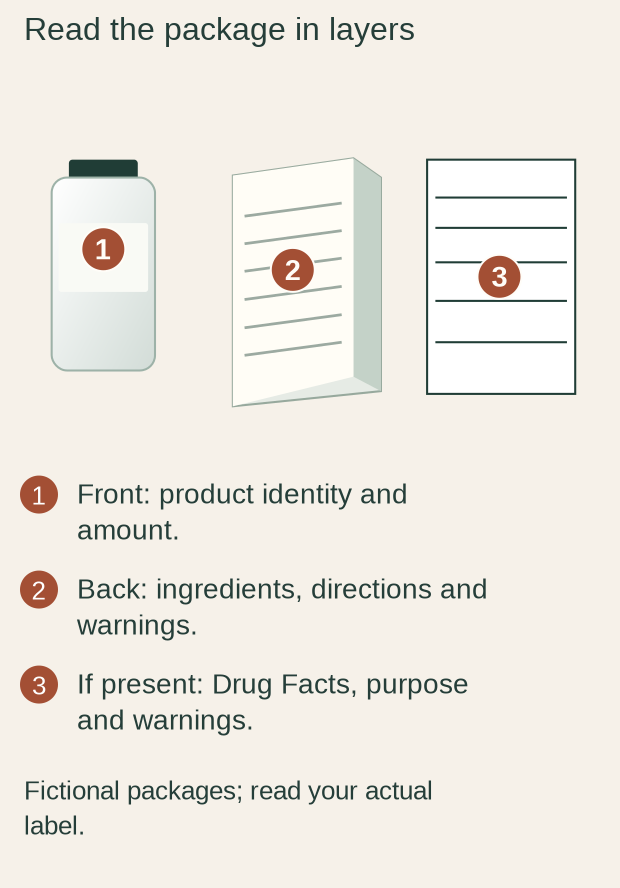
Don’t use the illustration as substitute directions for a real product. Its job is to show where different kinds of information belong, while your own package remains the place to check the instructions.
Keep claims in their own lane
A front label may mention a popular ingredient, a texture, or a suggested benefit. Write down the exact claim if it matters to you, then ask what information the company provides to explain it.
“Hypoallergenic” isn’t a promise that you won’t react: the FDA says there are no federal standards or definitions governing that term. It should not replace your own relevant avoidance instructions or a clinician’s advice.
Similarly, a beautifully designed badge doesn’t tell you what was assessed unless you can identify the organization and the criteria. If you can’t verify what the badge means, leave that part of the comparison unresolved.
You don’t need to label every unverified claim false. “Not enough information for my decision” is a useful, honest category that lets you move on without making an accusation.
Read the directions before the checkout
Check where the product is intended to go, how it’s applied, and whether it must be rinsed off. Read any warnings that relate to the way you plan to use it.
If you were hoping to use a product near your eyes, for example, don’t assume a general face-care label gives you that permission. Find the relevant directions, and ask the manufacturer or a qualified professional if they leave your question unanswered.
Think about whether the instructions fit a normal weekday. A product that asks for steps you won’t consistently follow isn’t automatically the right purchase just because the packaging describes a benefit you want.
Try a two-product shelf comparison
Imagine you’re comparing two fictional body moisturizers, A and B. Both fit your budget, so your next task is to compare their actual labels rather than deciding which bottle looks more clinical.
For A, record the net quantity, dispenser, fragrance wording, and directions. Repeat the same check for B, leaving a blank whenever you can’t find an answer instead of guessing from the brand’s reputation.
Suppose A uses a pump you can manage with one hand, while B uses a tub you find awkward on your narrow shelf. That is a practical reason to prefer A, even if the ingredient lists aren’t something you can meaningfully rank.
If B costs less per ounce but you dislike its application instructions, the unit price doesn’t settle the choice. Your final note can say “A fits my setup; B is cheaper by volume,” preserving both facts.
Check online photos against the item you receive
When shopping online, open the label photographs and check whether the exact size and variant match your selected option. A listing can display several images, and the picture you first see may not answer your question about the package in your cart.
Save the manufacturer’s current product page or your own label photo with the product name. If the package that arrives differs, pause and compare the details before assuming the difference is only cosmetic.
You can contact the seller or manufacturer with a clear question and the relevant package information. Avoid opening or using an item merely to settle an uncertainty that the supplier should be able to explain.
Make small print easier to check
Use your phone camera to enlarge the label if the store allows it and the lighting makes the print difficult to read. Photograph the whole panel as well as the detail, so you can still tell which container the enlarged words belong to.
If a retail shelf label and the package disagree on quantity or price, ask the store to clarify before calculating value. A precise calculation is only useful when the numbers refer to the actual item you plan to buy.
You can leave the comparison unfinished and check a current manufacturer page at home. Saving the exact product name is enough to resume without making a rushed guess.
Leave with a usable note
Your finished label check can fit in a few lines: what it is, how you use it, how much it contains, and any unanswered question. Add an exact product name so you can distinguish it from neighboring versions later.
If you have known allergies or a treatment plan, use the specific instructions you have been given. A general shopping guide cannot decide whether a particular formula is appropriate for your medical circumstances.
Reading a label well doesn’t mean knowing everything about the formula. It means finding the information that actually changes your purchase and being comfortable leaving the rest undecided.